Design Technology
What do we want our curriculum to achieve?
- Provide opportunity to develop skills, knowledge and understanding of designing and making functional products
- Nurture creativity and innovation through design, and by exploring the designed and made world in which we all live and work.
How do we fulfil this in KS1?
Pupils are taught how to design, make, evaluate and develop their technological skills and be taught nutrition, cooking techniques along with hygienic and safe practice through the following process:
- Design (consider users & purposes, develop, model & communicate)
- Make (planning, practical skills & techniques)
- Evaluate (own ideas & existing products)
- Technical knowledge (making products work)
Key Stage 1 learning modules
Mechanisms:
CYCLE A - Are bigger wheels always better?
- Understanding how wheels and axles work
- Exploring the size of wheels and the positioning of axles
- Building and testing a simple vehicle
CYCLE B - How can you make a picture move?
- Exploring sliders and their applications
- Experimenting with different slider systems
- Designing and making a moving picture.
Structures:
CYCLE A - How strong is a piece of paper?
- Experimenting with pillar structures to hold a load.
- Using different shapes to test paper strength
- Create a free-standing structure to hold a given weight.
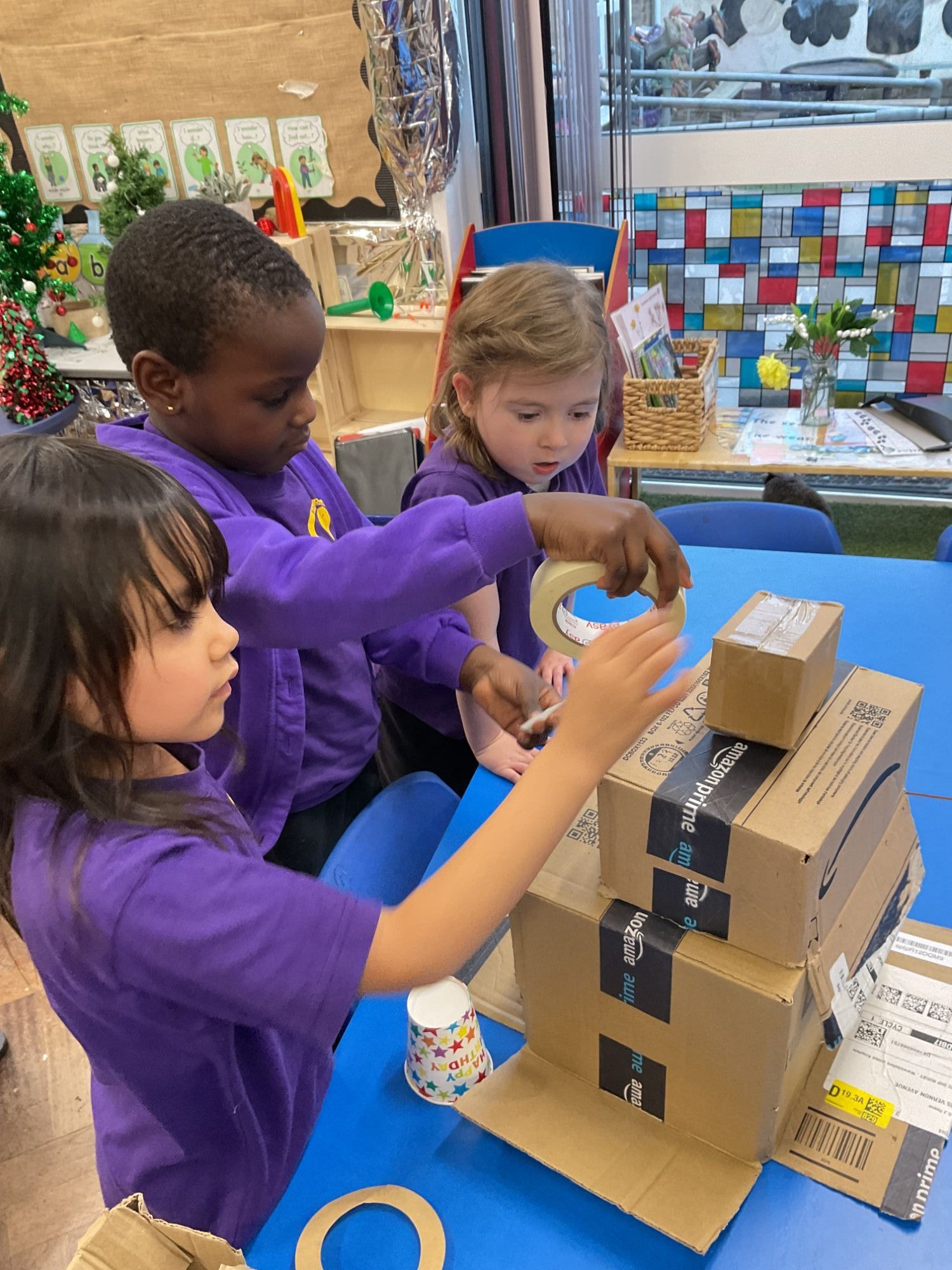
CYCLE B - How can you stop a tower from falling over?
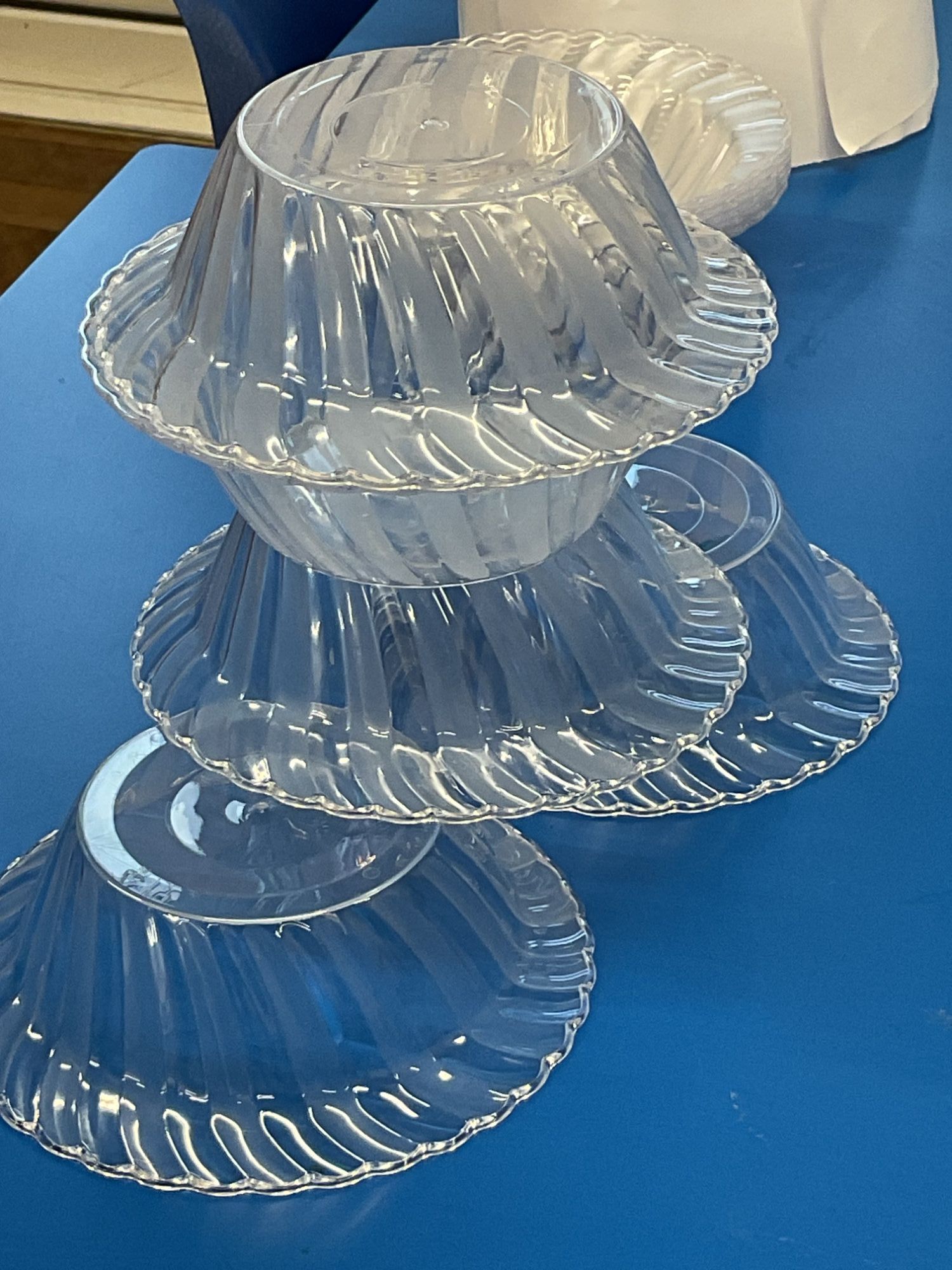
- Exploring stability and free-standing structures.
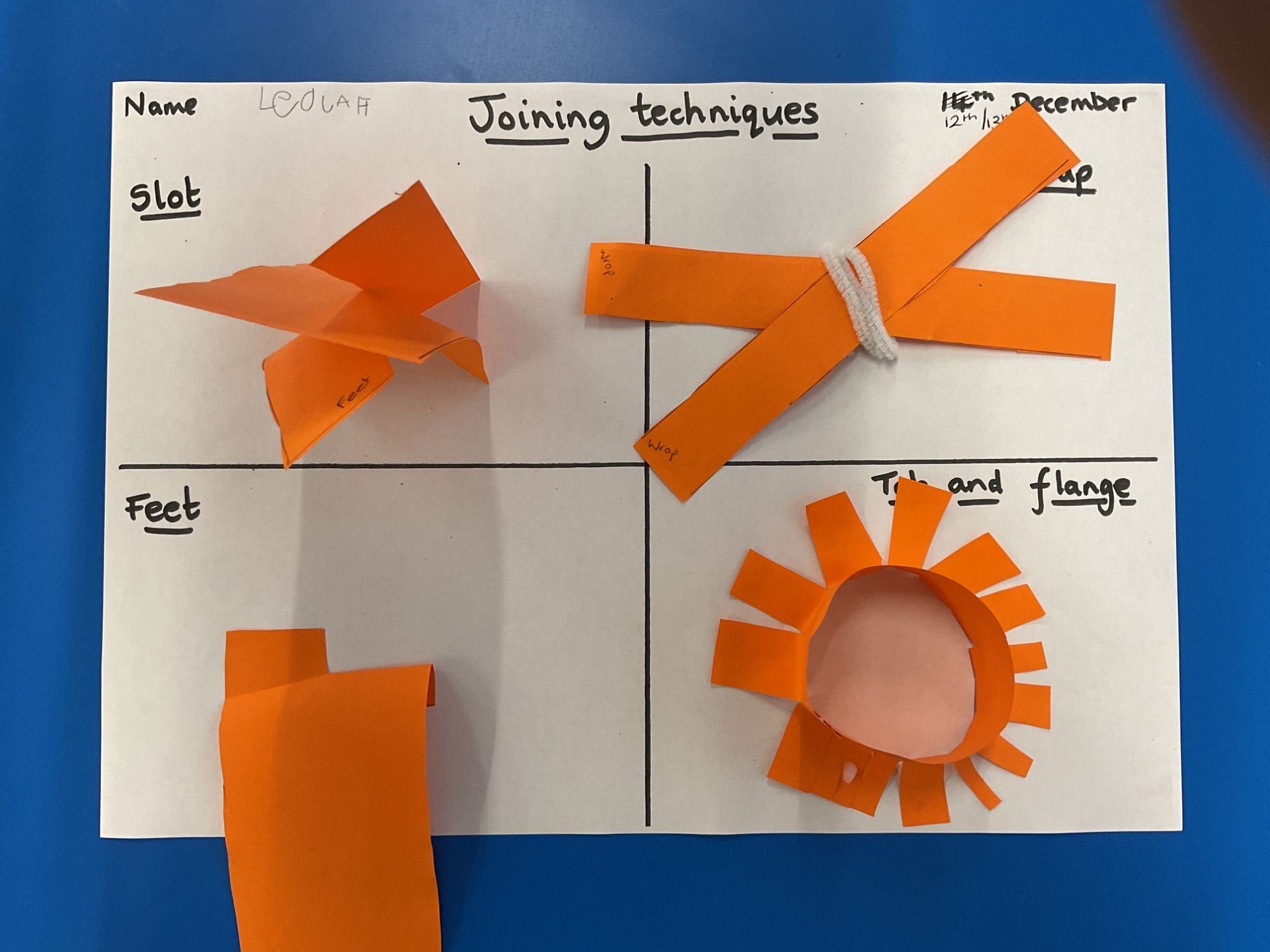
- Learning joining techniques to support free-standing structures.
- Applying joining techniques to build tall towers.
Food and nutrition:
CYCLE A - What does healthy mean?
How healthy is your food?
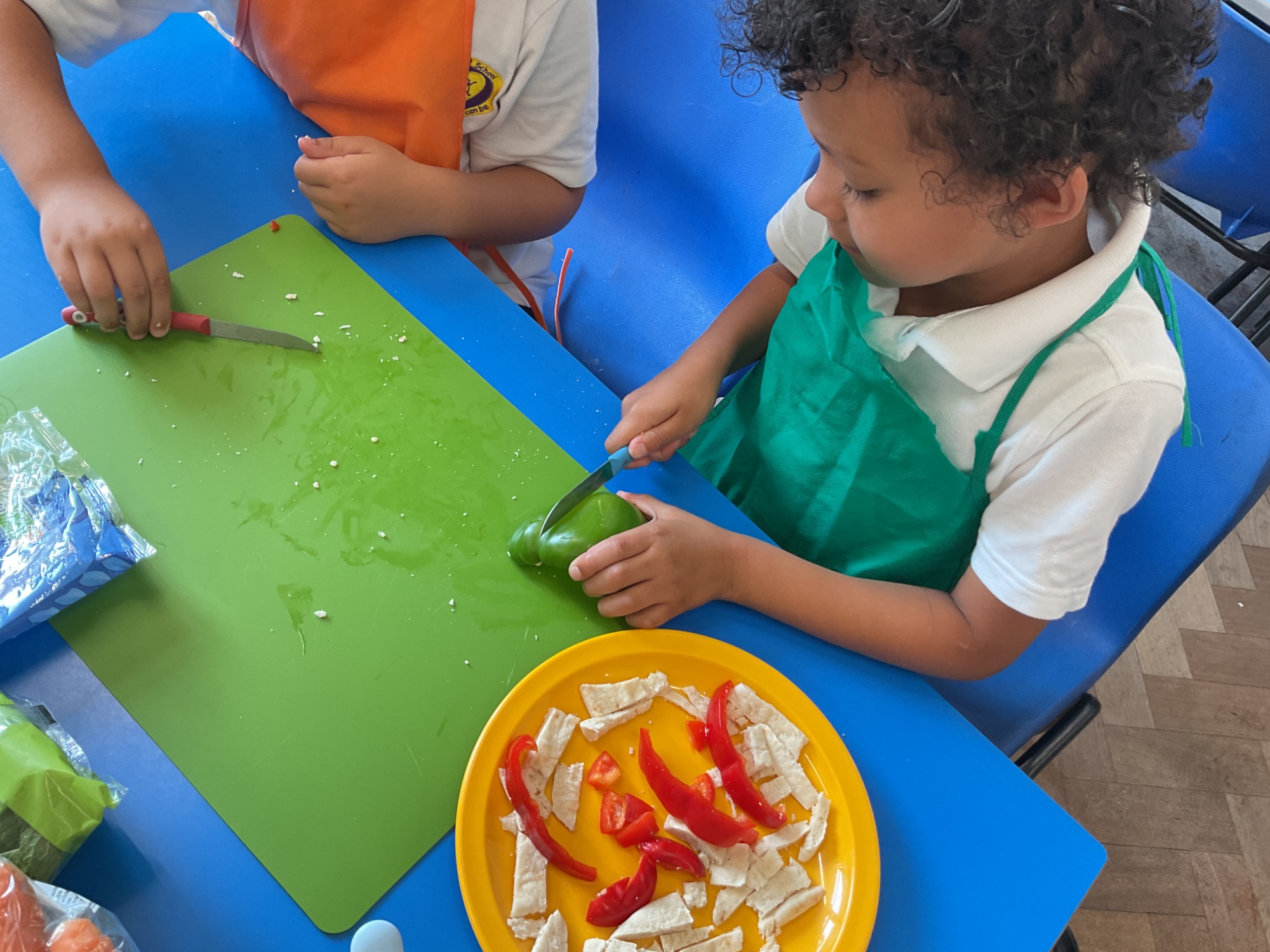
- Develop the skills of grating, cutting, peeling and mixing.
- Explore the nutritional value of food and the different between fresh and processed foods.
- Shape and form ingredients to create delicious food.
CYCLE B - How does food affect your senses?
Why are vegetables the best?
- Peel, grate, season and breadcrumb a range of vegetables.
- Know the importance of having a range of vegetables in your diet.
- Explore the sensory qualities of food when creating delicious food.
Understanding materials:
CYCLE A - How can you waterproof a hat?
- Exploring and testing different materials to see what makes them waterproof
- Learning about designers such as Arthur Wellesley
- Investigate ways to make paper waterproof.
- Design, make, test and evaluate a waterproof hat.
CYCLE B - Can you build with bread?
- Identify a range of construction materials
- Investigate how materials can be changed by adding heat or water
- Use a combination of materials to create a small model house
Textiles:
CYCLE A - How can you repurpose an item of clothing?
- Explore a variety of different fabrics.
- Learn how fabrics can be repurposed to create patchworks.
- Create appliqué designs using geometric shapes.
- Use overstitch to stitch two pieces of fabric together.
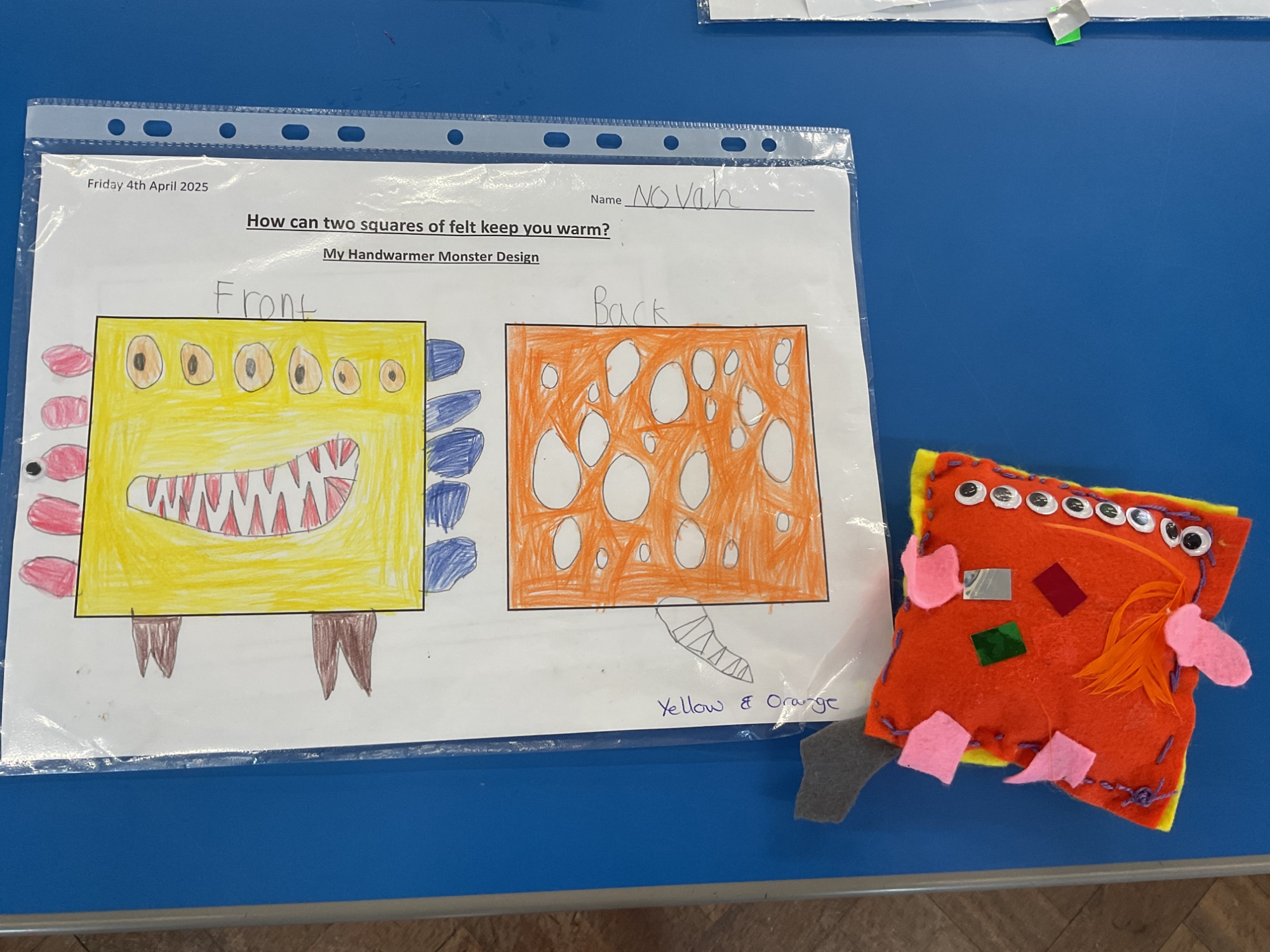
CYCLE B - How can two squares of fabric keep you warm?
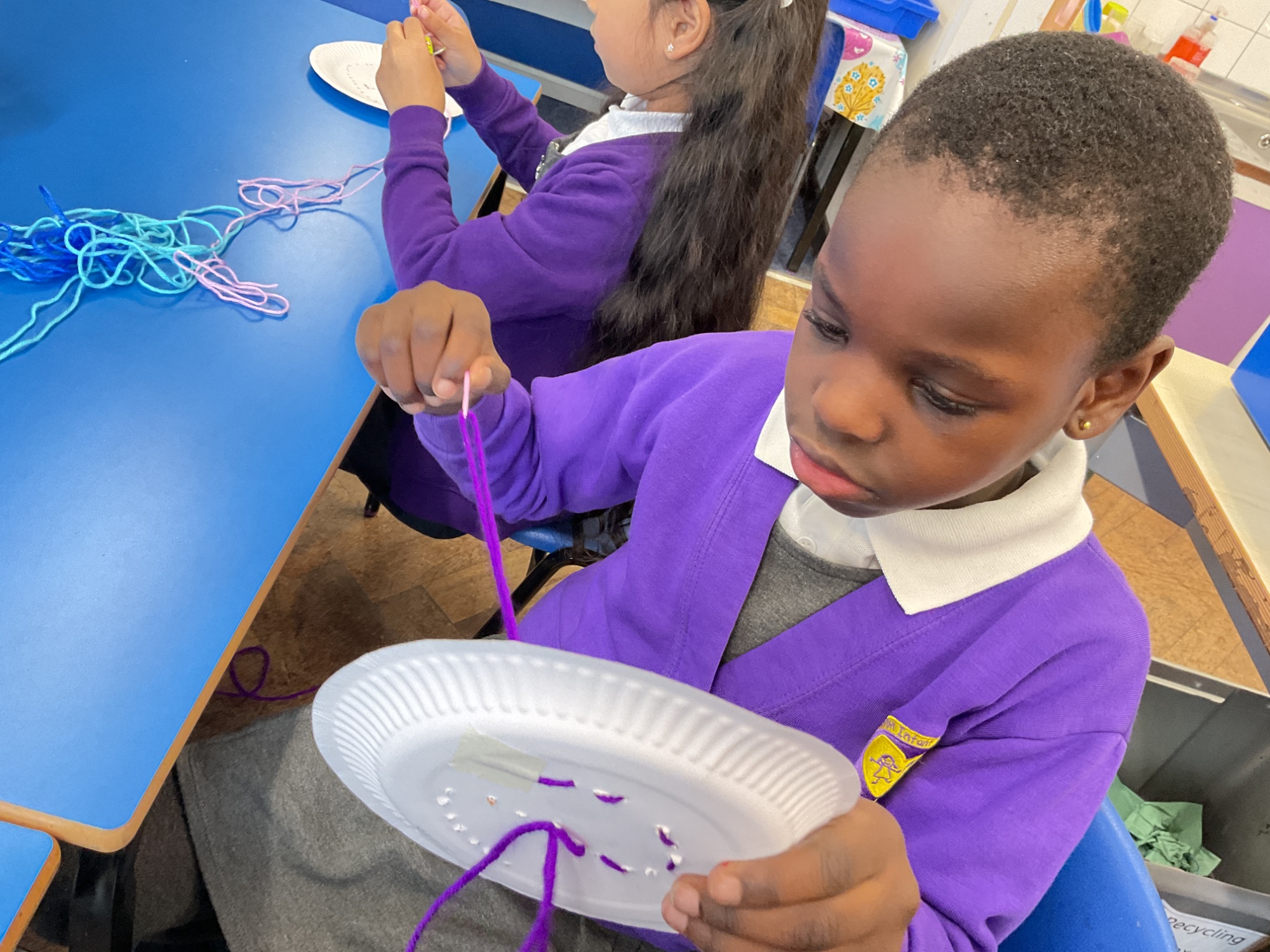
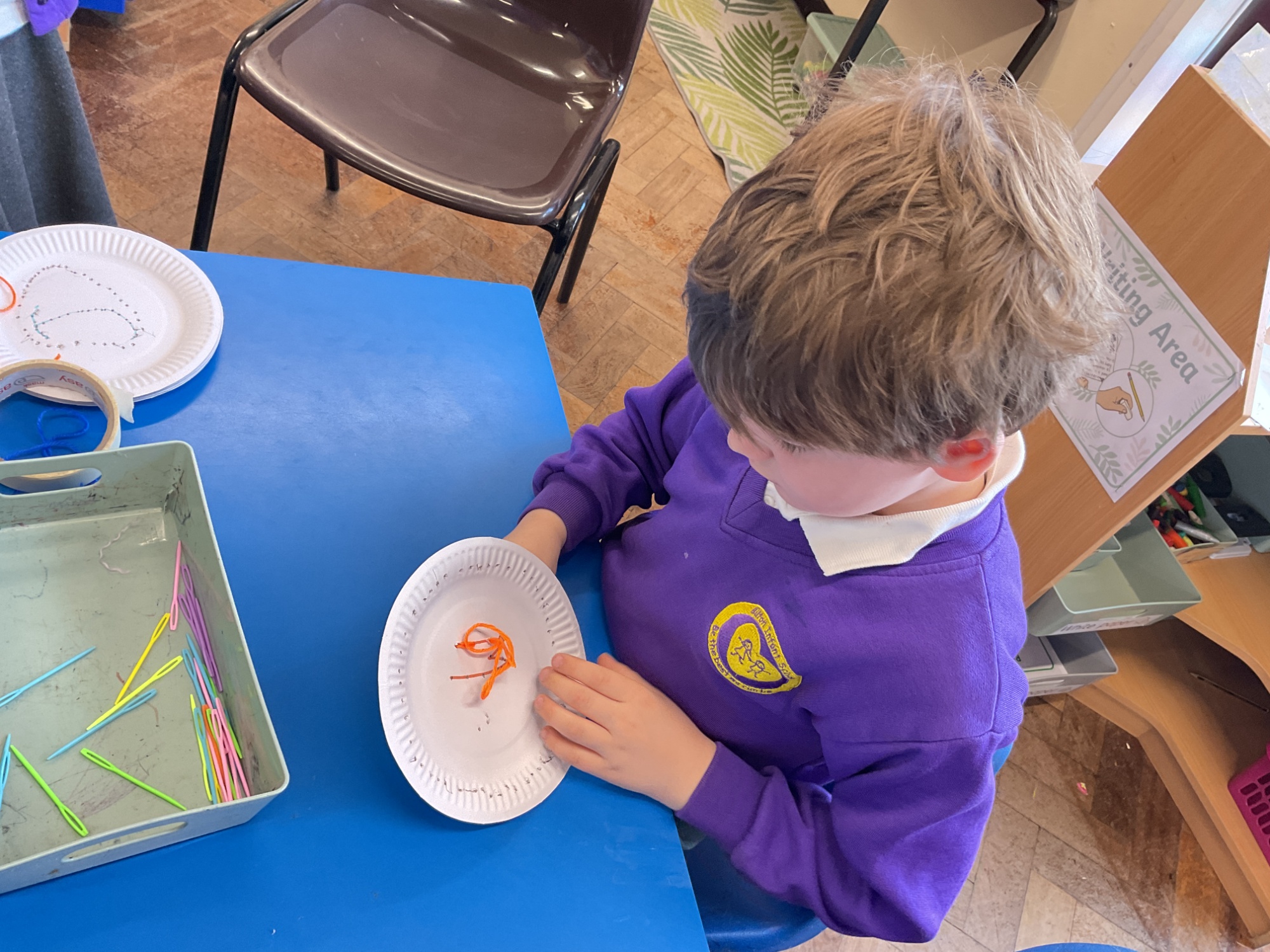
- Learn how to use a running stitch to create a shape or design.
- Use weaving techniques on open weave fabrics such as mesh or binca.
- Design, make and evaluate a Monster handwarmer using felt, collage materials and running stitch.